Have you ever noticed that your back feels fine when you first get up, but after standing for 10 or 20 minutes, it begins to ache?
Maybe it happens while cooking dinner, waiting in line at the grocery store, attending church, gardening, or watching your grandchildren’s sporting events.
If so, you’re not alone.
Back pain with prolonged standing is a common complaint, especially among adults over 50. The good news is that it doesn’t always mean something is seriously wrong. In many cases, the discomfort is related to changes in strength, endurance, posture, joint mobility, or other age-related changes that can often be managed with conservative treatment and regular exercise.¹
In this article, we’ll explain why standing can trigger back pain, common conditions that may contribute, and practical strategies that may help you stay active with greater comfort.
Why Does Standing Cause Back Pain?
Standing may seem like a restful activity, but your body is actually working continuously to keep you upright.
Your spine, muscles, hips, pelvis, and legs must constantly make small adjustments to maintain balance and posture.²
When these tissues become fatigued — or when certain joints become irritated — pain may gradually develop.
Unlike lifting something heavy, standing-related back pain usually develops because of repeated, low-level stress over time, rather than one sudden injury.³
Common Causes of Back Pain While Standing
1. Muscle Fatigue
One of the most common reasons people develop back pain while standing is simple muscle fatigue.
The muscles that support your spine — especially the core, gluteal muscles, and spinal stabilizers — must remain active the entire time you’re standing.²
If these muscles have reduced endurance, they may become tired, allowing additional stress to be placed on the joints and ligaments of the lower back.
Common signs include:
- Dull, aching pain
- Relief after sitting down
- Pain that gradually increases the longer you stand
- Minimal pain first thing in the morning
Fortunately, muscle endurance often improves with an individualized strengthening program.²
2. Arthritis of the Spine
As we age, the small joints in the spine (called facet joints) naturally experience wear over time.
These joints may become stiff or arthritic, making prolonged standing uncomfortable.¹
People with facet joint arthritis often notice:
- Pain after standing
- Morning stiffness
- Relief when sitting or bending slightly forward
- Difficulty standing in one place for extended periods
Although arthritis cannot be reversed, exercise and movement remain among the most effective ways to manage symptoms.⁴
3. Spinal Stenosis
Spinal stenosis occurs when the spaces around the spinal nerves become narrower, often because of age-related changes.⁵
Standing upright may temporarily increase pressure around the nerves.
Many people with spinal stenosis report:
- Back pain while standing
- Leg pain or heaviness while walking
- Improvement when sitting
- Feeling better when leaning forward on a shopping cart
These symptoms are sometimes called the “shopping cart sign.”⁵
4. Poor Postural Endurance
Posture isn’t about sitting or standing perfectly straight all day.
Instead, it’s about having the strength and endurance to comfortably maintain a variety of positions throughout the day.²
When muscles tire, people often begin:
- Leaning backward
- Locking their knees
- Shifting weight to one leg
- Increasing stress on the lower back
Small changes in posture over long periods can increase discomfort.
5. Hip Weakness
Many people assume standing-related back pain always originates from the spine.
However, weakness around the hips and pelvis often contributes significantly.⁶
Your hip muscles help stabilize the pelvis during standing and walking. When they become weak, your lower back may compensate by working harder than necessary.
Does Standing Mean Something Is Seriously Wrong?
Usually not.
Most back pain related to standing is considered mechanical back pain, meaning it changes with movement and position rather than indicating a serious medical condition.¹
However, you should seek prompt medical evaluation if prolonged standing is accompanied by:
- Progressive leg weakness
- Loss of bowel or bladder control
- Numbness around the groin or saddle area
- Fever
- Unexplained weight loss
- Significant pain following trauma
- A history of cancer with new, persistent back pain¹
These symptoms may indicate a more serious condition that requires immediate medical attention.
Should I Get an MRI?
Not necessarily.
Research has shown that many adults without back pain have findings such as:
- Disc bulges
- Arthritis
- Degenerative discs
- Spinal stenosis
These changes often represent normal aging rather than the cause of pain.⁷
Current clinical guidelines recommend imaging only when it is likely to change treatment decisions or when serious conditions are suspected.⁴
What Can Help?
The encouraging news is that most people improve with conservative care.⁴ Strategies that may help include:
Stay Active
Prolonged bed rest is no longer recommended for most episodes of back pain. Regular walking and gentle movement often promote recovery.⁴
Improve Core and Hip Strength
Improving muscular endurance helps reduce stress placed on the spine during standing.²
Change Positions Frequently
Instead of standing completely still for long periods, try:
- Shifting your weight
- Taking short walking breaks
- Placing one foot on a small step or stool
- Alternating positions every 20–30 minutes
These simple strategies can reduce fatigue.
Improve Mobility
Limited mobility in the hips, thoracic spine, or ankles may increase stress on the lower back. An individualized exercise program can help address these limitations.²
Physical Therapy
A comprehensive evaluation can identify movement limitations, strength deficits, balance impairments, and mobility restrictions contributing to your symptoms. Treatment may include:
- Therapeutic exercise
- Manual therapy
- Movement retraining
- Balance training
- Education
- Progressive strengthening⁴
How We Help at Kriz Mobility and Vitality
At Kriz Mobility and Vitality, we understand that no two cases of back pain are exactly alike.
Rather than focusing only on where the pain occurs, we work to identify why your symptoms developed in the first place.
Depending on your examination findings and goals, your treatment plan may include:
- Therapeutic exercise
- Functional movement retraining
- Manual therapy
- Balance and gait training
- Neuromodulation when clinically appropriate
- Radial shockwave therapy when indicated
- Photobiomodulation (light therapy) as part of a comprehensive rehabilitation program
Our goal is to help you return to the activities you enjoy — whether that’s golfing, gardening, traveling, playing pickleball, or simply standing comfortably while cooking dinner.
Frequently Asked Questions
Why does my back hurt more when I stand than when I walk?
Walking allows your muscles and joints to move continuously, while standing in one position places sustained demand on the muscles that support your spine.²
Is standing bad for my back?
Not necessarily. Standing is healthy, but remaining in one position for prolonged periods may increase discomfort for some individuals. Regular movement throughout the day is generally recommended.⁴
Can weak core muscles cause back pain while standing?
Yes. Reduced endurance of the core and hip muscles can increase stress on the lower back during prolonged standing.²
Can physical therapy help?
For many people, yes. Evidence supports individualized exercise and physical therapy as effective conservative treatments for many forms of mechanical low back pain.⁴
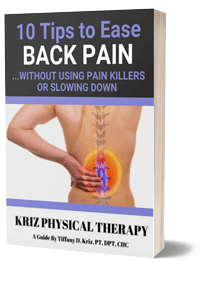
Download Our Free Back Pain Guide
Want to learn more about back pain after age 50? Download our Free Back Pain Guide to discover:
- Common causes of back pain
- Evidence-based treatment options
- Simple exercises that may improve mobility
- Tips for reducing future flare-ups
Schedule a Complimentary Telephone Consultation
If back pain is limiting your ability to enjoy everyday activities, our team at Kriz Mobility and Vitality is here to help. Schedule a complimentary telephone consultation to discuss your symptoms, ask questions, and learn more about your options.
References
1. Hartvigsen J, Hancock MJ, Kongsted A, et al. What Low Back Pain Is and Why We Need to Pay Attention. The Lancet. 2018;391(10137):2356-2367.
2. George SZ, Fritz JM, Silfies SP, et al. Interventions for the Management of Acute and Chronic Low Back Pain: Revision 2021. Journal of Orthopaedic & Sports Physical Therapy. 2021;51(11):CPG1-CPG60.
3. Foster NE, Anema JR, Cherkin D, et al. Prevention and Treatment of Low Back Pain: Evidence, Challenges, and Promising Directions. The Lancet. 2018;391(10137):2368-2383.
4. Qaseem A, Wilt TJ, McLean RM, Forciea MA; Clinical Guidelines Committee of the American College of Physicians. Noninvasive Treatments for Acute, Subacute, and Chronic Low Back Pain: A Clinical Practice Guideline From the American College of Physicians. Annals of Internal Medicine. 2017;166(7):514-530.
5. Genevay S, Atlas SJ. Lumbar Spinal Stenosis. Best Practice & Research Clinical Rheumatology. 2010;24(2):253-265.
6. Cooper NA, Scavo KM, Strickland KJ, et al. Prevalence of Gluteus Medius Weakness in People With Chronic Low Back Pain Compared With Healthy Controls. European Spine Journal. 2016;25(4):1258-1265.
7. Brinjikji W, Luetmer PH, Comstock B, et al. Systematic Literature Review of Imaging Features of Spinal Degeneration in Asymptomatic Populations. American Journal of Neuroradiology. 2015;36(4):811-816.
This material is educational in nature and is not a substitute for individualized medical advice, diagnosis, or treatment. Consult a qualified health care provider with any questions regarding a medical condition.